
rebar rust treatment & protection
Professional Reinforcement Corrosion Treatment for Buildings. Remove Rust. Protect Reinforcement. Restore Concrete Durability.
CHEMFIX Building Repair Solutions provides rebar rust treatment and corrosion protection services for reinforced concrete structures. Our services focus on the treatment of corroded reinforcement, preparation of exposed steel bars, application of suitable corrosion-protection systems, and repair of damaged concrete cover.
Reinforcement corrosion can lead to rust staining, concrete cracking, delamination, spalling, reduced reinforcement cross-section, and deterioration of reinforced concrete structures. Early assessment and an appropriate repair system can help control further deterioration and extend the service life of the repaired structure.
We provide construction chemical supply, professional application services, and project-based reinforcement protection and concrete repair solutions for residential, commercial, and industrial buildings.
CHEMFIX Building Repair Solutions — Repair. Protect. Restore.
—
Our Rebar Rust Treatment & Protection Services
1. Rust Removal from Reinforcement Bars
Corroded reinforcement must be properly prepared before applying a protective treatment or repair mortar.
Our services include:
– Exposure and inspection of accessible corroded reinforcement
– Removal of loose rust, scale, and corrosion deposits
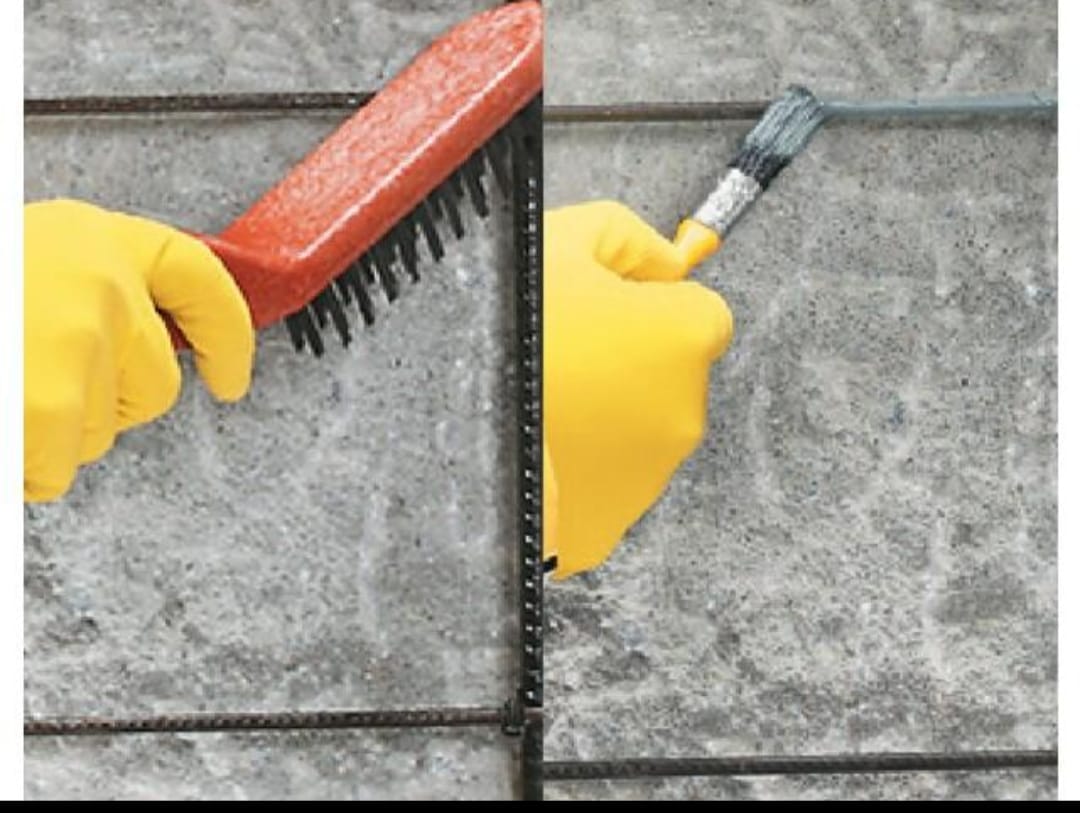
– Mechanical cleaning using suitable wire brushes or other approved tools
– Assessment of visible steel deterioration and section loss
– Preparation of reinforcement according to the selected protection system
– Cleaning and preparation before subsequent treatment
The cleaning method is selected according to the corrosion severity, accessibility, site conditions, and repair specification.
2. Anti-Corrosion Protection for Reinforcement
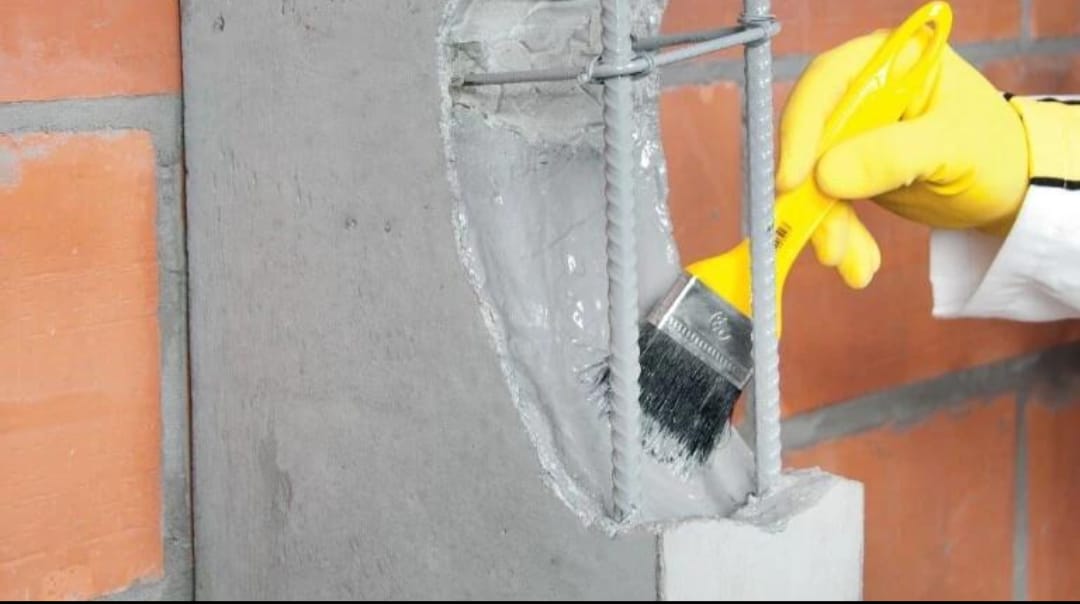
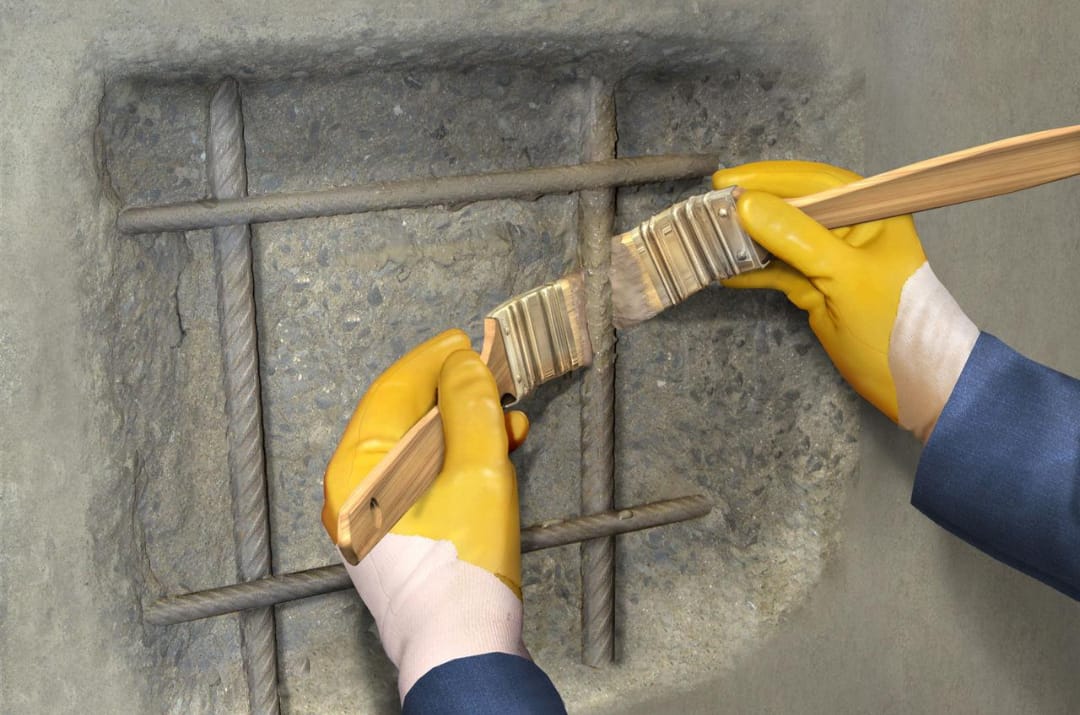
After suitable preparation, exposed reinforcement may require a compatible corrosion-protection treatment before reinstatement of the concrete cover.
CHEMFIX can provide and apply suitable reinforcement-protection products according to the requirements of the repair system.
Depending on the selected product, the treatment may provide:
– Corrosion protection for prepared reinforcement
– A protective barrier against moisture and aggressive substances
– Compatibility with specified cementitious repair mortars
– Improved durability of the repaired concrete system when correctly applied
Product selection, surface preparation, application thickness, curing, and recoat intervals must follow the relevant technical data sheet.
3. Damaged Concrete Cover Repair
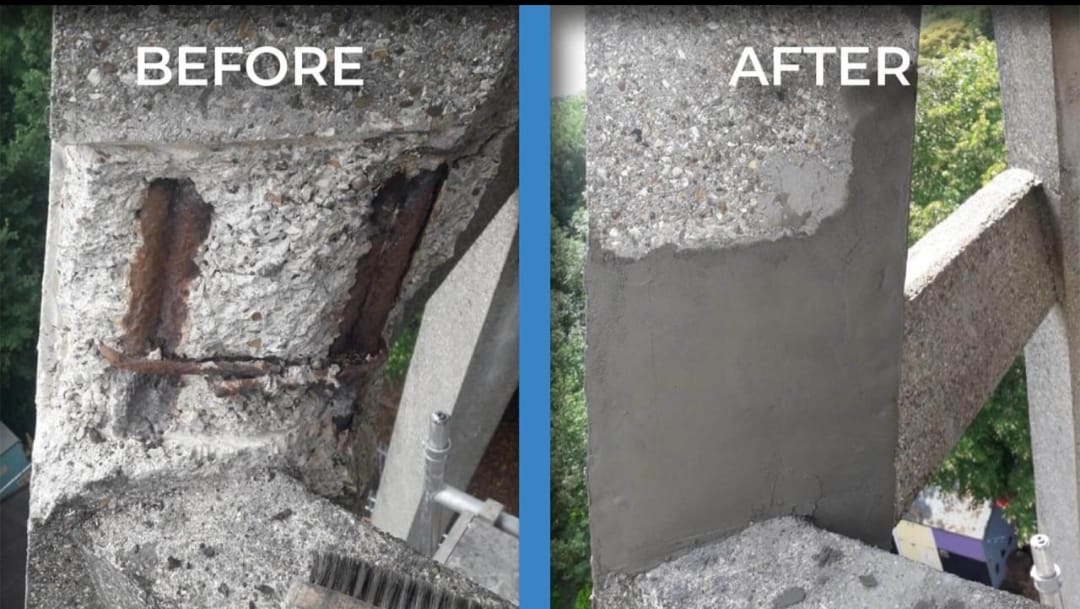
Corrosion products occupy a greater volume than the original steel, which can create internal pressure and cause concrete cracking, delamination, and spalling.
Our concrete repair services include:
– Removal of loose and unsound concrete
– Exposure of reinforcement as required by the repair specification
– Cleaning and assessment of corroded steel
– Application of a compatible reinforcement-protection treatment, where specified
– Application of suitable repair mortar or repair concrete
– Restoration of the concrete cover and surface finish
– Inspection of the completed repair
The repair material is selected according to the repair depth, structural position, substrate condition, exposure environment, and application requirements.
4. Concrete Spalling & Reinforcement Rehabilitation
Concrete spalling around columns, beams, slabs, balconies, and other reinforced concrete elements may indicate reinforcement corrosion or other deterioration.
Our services may include:
– Assessment of damaged concrete and exposed reinforcement
– Removal of unsound concrete
– Preparation and treatment of reinforcement
– Application of suitable repair mortar or micro-concrete
– Restoration of the concrete profile and cover
– Protective coating application where specified
Structural elements with significant damage require assessment by a qualified structural engineer before repair work proceeds.
5. Protective Coating for Repaired Concrete
After concrete repair, a suitable protective coating may help reduce the ingress of moisture and other aggressive substances.
Depending on the exposure conditions, suitable systems may include:
– Anti-carbonation coatings
– Compatible protective coatings for concrete
– Water-repellent treatments for suitable surfaces
– Additional waterproofing systems where water ingress is part of the deterioration mechanism
The coating must be compatible with the concrete substrate and the repair materials and must not replace necessary structural repairs.
—
Common Signs of Rebar Corrosion
Reinforcement corrosion may be suspected when one or more of the following conditions are observed:
– Rust stains appearing on concrete surfaces
– Cracks running along reinforcement lines
– Concrete cover breaking, bulging, or falling away
– Exposed reinforcement bars with visible rust
– Hollow-sounding or delaminated concrete
– Deterioration of balconies, beams, columns, slabs, or other reinforced concrete elements
These signs require appropriate assessment. Similar symptoms can also result from other causes, so the underlying mechanism should be investigated before selecting a treatment.
—
Where Our Services Can Be Applied
Residential Buildings
– Columns and beams
– Roof slabs and balconies
– Staircases and landings
– Parking areas and exposed concrete surfaces
Commercial Buildings
– Office buildings
– Shopping complexes
– Hotels and institutional buildings
– Commercial parking structures
Industrial & Infrastructure Structures
– Industrial buildings and reinforced concrete floors
– Concrete equipment foundations
– Selected retaining structures
– Other reinforced concrete elements subject to corrosion-related deterioration
Suitability depends on the condition of the structure, exposure environment, access, and the repair specification.
—
Our Rebar Rust Treatment Process
Step 1: Site Inspection & Condition Assessment
We inspect the affected area, identify visible corrosion-related damage, and assess the extent of concrete deterioration. Where necessary, further testing or structural evaluation is recommended.
Step 2: Removal of Damaged Concrete
Loose, cracked, delaminated, and unsound concrete is removed to reach a suitable repair substrate. The extent of removal must allow proper access to the affected reinforcement.
Step 3: Reinforcement Cleaning
Rust, scale, and loose corrosion products are removed using a suitable preparation method. The reinforcement is then assessed for visible section loss or other significant deterioration.
Step 4: Anti-Corrosion Treatment
A compatible reinforcement-protection product is applied when specified by the selected repair system. Surface condition, coverage, drying time, and application requirements follow the product technical data sheet.
Step 5: Concrete Repair
A suitable repair mortar, repair concrete, or micro-concrete system is applied to restore the damaged concrete profile and required cover. Bonding materials and primers are used where required by the system.
Step 6: Curing & Surface Protection
The repaired area is cured and protected as required. Where specified, a suitable protective coating is applied after the substrate has reached the required condition.
Step 7: Quality Inspection & Handover
The completed repair is inspected for workmanship, coverage, surface finish, and compliance with the agreed method statement. Relevant product and application records may be provided.
—
Construction Chemicals for Rebar Rust Treatment
The appropriate materials depend on the site condition and the specified repair system.
Rust Remover: Used for suitable rust-removal applications where the product is specifically compatible with reinforcement steel and the intended cleaning method.
Anti-Corrosion Reinforcement Protection: Applied to properly prepared reinforcement where the selected product is intended for use in reinforced concrete repair.
Bonding Agent: Used where required to establish an appropriate bond between existing concrete and the specified repair material.
Repair Mortar or Micro-Concrete: Used to restore damaged concrete cover and repair the concrete section according to the repair depth and application conditions.
Protective Concrete Coating: Used where specified to help limit moisture or aggressive-substance ingress into the repaired concrete.
CHEMFIX product selection is based on technical suitability and compatibility. A rust remover is not automatically an anti-corrosion coating, and neither product replaces the removal of unsound concrete or the reinstatement of damaged concrete cover.
—
Why Choose CHEMFIX Building Repair Solutions?
– Construction chemical supply and application services under one provider
– Site-specific assessment of reinforcement corrosion and concrete damage
– Suitable material selection for different repair conditions
– Systematic surface preparation and application procedures
– Concrete repair and protective coating options
– Project-based quotations with a defined scope of work
– Technical supervision and quality checks
—
Frequently Asked Questions
Q1. Can rusted reinforcement bars be repaired without replacing them?
In some cases, yes. If the remaining steel section and structural capacity are adequate, cleaning, corrosion protection, and concrete repair may be suitable. Bars with significant section loss or structural damage require assessment by a qualified structural engineer, who may specify reinforcement replacement or strengthening.
Q2. Is rust remover enough to protect reinforcement?
No. Rust removal and corrosion protection are different functions. After suitable cleaning, a compatible protection system and proper concrete reinstatement may be required. The complete repair must address the cause of deterioration.
Q3. Can anti-rust treatment be applied directly over loose rust?
Loose rust and scale generally need to be removed to the preparation standard required by the selected product. Application over unsuitable surfaces can compromise adhesion and protection.
Q4. Why does concrete break away around reinforcement?
Corrosion can produce expansive rust products that place pressure on the surrounding concrete. Inadequate cover, moisture, chloride contamination, carbonation, and poor concrete quality may contribute to the problem.
Q5. Can CHEMFIX repair corroded reinforcement in columns and beams?
CHEMFIX can provide relevant chemical supply and repair application services, subject to site assessment and technical requirements. Damage affecting structural safety must be evaluated by a qualified structural engineer before repair.
Q6. How can future reinforcement corrosion be reduced?
Appropriate concrete cover, good-quality repair materials, correct curing, control of water ingress, suitable protective systems, and attention to the original corrosion mechanism can help reduce the risk of future deterioration.
Q7. Do you provide complete rebar rust treatment and concrete repair contracts?
Yes. Depending on project requirements, the proposed scope can include site inspection, concrete removal, reinforcement preparation, corrosion protection, concrete repair, surface protection, and agreed quality checks.
—
Request a Rebar Rust Treatment Inspection
Is your building showing rust stains, exposed reinforcement, cracked concrete cover, or concrete spalling?
Contact CHEMFIX Building Repair Solutions for a site inspection, technical recommendation, construction chemical supply, or complete reinforcement corrosion treatment and concrete repair contract.
Our Service Options
– Rebar Rust Removal & Preparation
– Anti-Corrosion Reinforcement Protection
– Concrete Spalling Repair
– Concrete Cover Restoration
– Protective Coating Application
– Complete Repair & Rehabilitation Contracts
CHEMFIX Building Repair Solutions
Repair. Protect. Restore.
Contact our team to discuss your project and request a quotation.
Important: Structural safety, reinforcement section loss, and the extent of concrete deterioration must be assessed appropriately. Repair materials and application methods should be selected according to the project specification and the relevant product technical data sheets.
—